


Table of Contents
The gaming world is on the brink of something extraordinary. Between now and 2035, we’re about to witness changes that will completely transform how we play, create, and think about video games. We’re talking about artificial intelligence that builds entire game worlds, cloud technology that lets you play anywhere, and even brain interfaces that respond to your thoughts.
The numbers tell an impressive story. The gaming industry was worth around $210-220 billion in 2024, and experts predict the metaverse gaming market alone could hit $168.4 billion by 2030. But this isn’t just about making more money or creating prettier graphics. We’re looking at a fundamental shift in what gaming actually means.
How Artificial Intelligence is Changing Everything
AI is Becoming a Game Developer
Right now, about one in three game developers already use AI tools in their daily work. They’re using these smart systems to create game worlds, design characters, write dialogue, and build levels. But we’re just scratching the surface.
Within the next few years, AI won’t just help developers—it’ll be able to design complete games on its own. Imagine typing in a simple idea like “I want a space adventure with puzzle-solving,” and an AI system creates an entire game based on your description. It’ll design the gameplay mechanics, generate all the visual assets, balance the difficulty, and even write the story.
This technology is a game-changer for small studios and independent creators. What used to require a team of 50 people and three years of work might soon be accomplished by a handful of passionate developers with AI assistance.
Game Worlds That Never Stop Evolving
Here’s where things get really exciting. Today’s procedurally generated games create random content, but it stays the same once it’s made. By 2030, we’ll have game worlds that continue to change and evolve on their own—even when you’re not playing.
Picture a game where forests actually grow and change with the seasons, cities rise and fall based on realistic economic conditions, and entire civilizations develop their own cultures and histories. Every time you log in, something new has happened. No two players will ever have the exact same experience because the world keeps living and breathing.

NPCs That Feel Real
Non-player characters—the computer-controlled people you meet in games—are about to get a major upgrade. Instead of repeating the same lines over and over, future NPCs will have actual conversations with you. They’ll remember what you said last time, form opinions about your actions, and react like real people would.
Some games will even read your emotions through your voice tone and facial expressions (using your webcam). Sony has already patented technology for this. If the game senses you’re frustrated, an NPC might offer encouragement. If you’re bored, the story might throw an unexpected twist your way.
Stories won’t follow predetermined paths anymore. AI storytellers will create personalized plotlines that adapt to your choices, generating millions of unique story possibilities. You won’t just be playing someone else’s story—you’ll be creating your own.
Cloud Gaming: Play Anything, Anywhere
No More Expensive Gaming Hardware
With over 5.5 billion people online worldwide, many using just their smartphones, cloud gaming is removing a major barrier to entry. You won’t need a $500 console or a $2,000 gaming PC anymore. Instead, you’ll stream high-quality games directly to whatever device you have—phone, tablet, laptop, or smart TV.
By 2030, the technology will have improved dramatically. Lag and image quality issues that plague today’s cloud gaming will be solved through faster internet, smarter data centers, and AI that predicts what you’ll do next to reduce delays.
The really cool part? You’ll start playing a game on your phone during your morning commute, continue on your work laptop during lunch, and finish on your TV at home—all seamlessly, without downloads or waiting.
See also: The 8 Best Gaming PCs to Dominate 2026: Your Complete Buying Guide
Subscription Services Take Over
Just like Netflix changed how we watch movies, gaming is moving toward subscription services. Instead of paying $70 for each game, you’ll pay a monthly fee for access to huge libraries of games.
This changes how games are made, too. Developers will focus on keeping you engaged over months and years rather than just making that initial sale. Expect more live updates, seasonal content, and reasons to keep coming back.
Virtual and Augmented Reality Go Mainstream
VR Finally Hits the Big Time
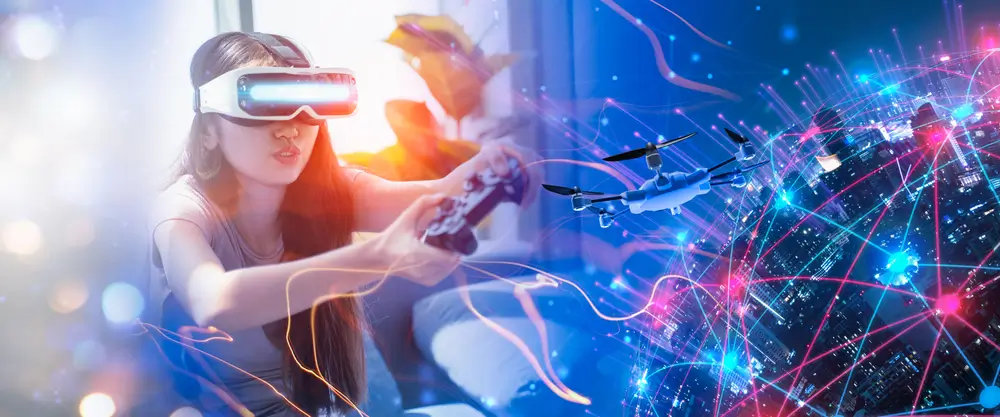
The Meta Quest 3 has captured most of the consumer VR market, showing that immersive gaming is ready for the mainstream. Over $2 billion has been spent on VR content so far, and playtime is up 30% year-over-year.
In the next ten years, VR will stop being a luxury and become a normal way to play games. Headsets will get cheaper, lighter, and more comfortable. Motion sickness will become a thing of the past, and you might not even need controllers anymore—the system will track your hands directly.
VR will expand beyond gaming into a complete computing platform. You’ll work, socialize, learn, and entertain yourself in virtual spaces. Gaming will be just one thing you do in these persistent virtual environments.
AR Brings Games Into Your Real World
While VR creates entirely digital worlds, augmented reality will blend games with your physical surroundings. And we’re not just talking about looking through your phone screen.
Future AR glasses will be lightweight and stylish, overlaying game elements onto the real world around you. Imagine Pokémon that actually live in your neighborhood, strategy games played on your kitchen table with holographic pieces, or fitness games that turn your morning jog into an adventure story.
The line between “playing a game” and “living your life” will blur. Game-like features—achievements, progress bars, competitions—will naturally weave into everyday activities.
The Metaverse: More Than Just a Buzzword
Persistent Virtual Worlds
The metaverse market could be worth trillions by 2030, with an estimated 5 billion users. This isn’t about individual games anymore—it’s about creating shared digital spaces where gaming, work, shopping, and socializing all happen in the same place.
Experts predict 433.99 million people will be actively playing in metaverse games by 2030, with the market growing at nearly 40% per year. Users won’t just play games—they’ll own virtual property, run businesses, attend concerts, and build communities in these digital worlds.
Platforms like Roblox and Fortnite have laid the groundwork, but the real metaverse requires interoperability. That means being able to move between different virtual worlds while keeping your identity, possessions, and friends. By 2035, you’ll carry your avatar, virtual items, and achievements across platforms run by different companies.

You’ll Actually Own Your Digital Stuff
Blockchain technology and NFTs have had a rocky start, but the core idea is solid: you should truly own your digital items. By 2030, when you buy a virtual item, you’ll really own it—not just have permission from a game company to use it.
This creates massive opportunities for player-creators. You’ll be able to design items, environments, or entire experiences and sell them across multiple platforms. The difference between professional developers and talented players will shrink as tools become more accessible.
Brain-Computer Interfaces: Gaming With Your Mind
Early Steps in Neural Gaming
This might sound like science fiction, but it’s already happening. Neuralink successfully implanted brain-computer interfaces in human patients starting in 2024, with 20 to 30 more procedures planned for 2025. While these are primarily for medical purposes now, gaming applications are inevitable.
Early users have already moved computer cursors and played simple games using only their thoughts. We’re at the very beginning, but Chinese researchers have developed interfaces that are 100 times more efficient and use 1,000 times less power than older versions.
Full Sensory Immersion
Neural interfaces won’t just replace controllers—they’ll enable completely new experiences. Imagine feeling what your game character feels, sharing sensations with other players, or controlling multiple characters simultaneously through thought alone.
By 2035, early adopters will experience games through all five senses—sight, sound, touch, smell, and taste—synthesized directly through neural signals. You could tour ancient Greece or visit a Seoul café, experiencing everything as if you were really there, all from your living room.
Breaking Down Platform Barriers
Breaking DowCross-Platform Gaming Becomes Standard
Remember when PlayStation players couldn’t play with Xbox players? Those days are ending. Cross-platform play used to be a special feature—now it’s what gamers expect.
The next decade will see platform exclusivity largely disappear. While some games might launch on specific platforms first, online games can’t afford to split their communities. Games like Fortnite, Call of Duty: Warzone, and Genshin Impact have proven that letting everyone play together creates stronger, longer-lasting games.
Cloud gaming accelerates this trend. When games stream from remote servers, it doesn’t really matter what device you’re using. Your phone, tablet, laptop, or TV can all deliver the same high-quality experience.
One Identity Across All Platforms
You’ll have one gaming identity that works everywhere. Your achievements, friends list, avatar, and purchase history will follow you across all platforms. Companies will compete on service quality and game selection rather than forcing you to buy specific hardware.
This challenges the business models of companies like Sony and Microsoft, who profit from keeping you locked into their ecosystems. There will be pushback, but the direction is clear: gamers want to play what they want, where they want, with whoever they want.
Esports Becomes True Mainstream Entertainment
Competitive Gaming as a Career
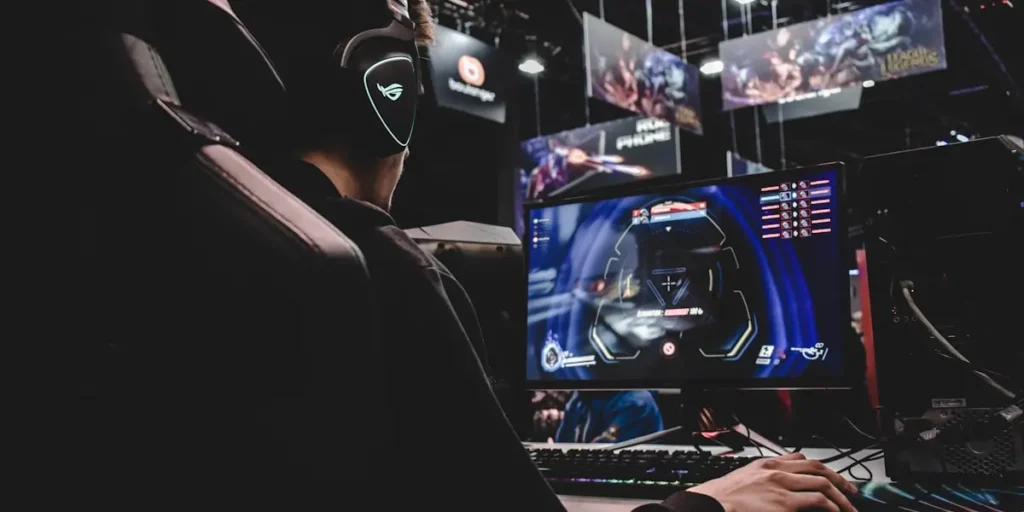
Esports is projected to generate $1.9 billion in revenue by 2025, with a massive global audience, especially in North America and Asia. We’ve already seen stadiums built specifically for gaming tournaments.
By 2035, esports will be as mainstream as traditional sports. Major cities will have dedicated esports arenas, universities will routinely offer gaming scholarships, and professional gaming will be a respected career path.
AI will transform competitive gaming in several ways. Automated coaching systems will analyze your gameplay and provide personalized training. AI-powered broadcasting will generate custom camera angles and commentary tailored to each viewer. Even game balance will be AI-managed, continuously adjusting to keep competition fair.
Gaming as Your Social Life
For Gen Z and younger millennials, gaming has become a primary way to socialize. Nearly half of young adults have made long-term friends through gaming, and 40% socialize more in games than in person. This trend will only intensify.
Virtual hangouts and shared experiences will increasingly happen in game environments rather than on social media or video calls. Discord, a social platform built around gaming, reached 150 million active users in 2024.
Games will integrate with your social connections seamlessly. Expect features where friends can spontaneously join your game, shared virtual spaces for just hanging out, and AI matchmaking based on personality compatibility, not just skill level.
Mobile Gaming Continues to Dominate
The Biggest Gaming Platform
More than half of the world’s 3.3 billion gamers play on mobile devices. Mobile gaming is expected to reach $165-170 billion by 2025, making up over half of all gaming revenue globally.
This dominance will only grow. Smartphones get more powerful every year, closing the gap with dedicated gaming devices. 5G networks eliminate lag that used to plague mobile gaming. Touch controls and motion sensors enable interactions impossible on traditional platforms.
Smarter Mobile Game Design
Mobile games are getting more sophisticated. The most successful ones balance monetization with genuine depth, respect players’ time while offering meaningful progression, and include social features that drive organic growth.
Future mobile games will build long-term relationships with players rather than chasing quick profits. Expect ethical monetization that avoids exploitative practices while still supporting developers.
Personalized Gaming Experiences
AI That Knows What You Like
AI will tailor games to your individual skill level and preferences. This goes way beyond simple difficulty settings. Games will learn what challenges engage you, what frustrates you, and what keeps you in that perfect state of flow.
Difficulty won’t be something you choose once at the beginning—it’ll be adjusted moment-by-moment to keep you challenged without overwhelming you. The game essentially becomes your personal gaming coach.
Content Created Just for You
Future games will generate content specifically for you. The missions you receive, the items you find, even the story moments you experience will be influenced by AI analysis of your preferences and playing style.
This personalization will make games feel custom-crafted for each player while still maintaining shared worlds where everyone can interact. It’s like everyone playing their own version of a game that exists within a common universe.
Important Challenges We Need to Address
Ethical Concerns
These transformations raise serious ethical questions. AI-generated content can perpetuate biases from its training data. Neural interfaces create privacy risks around your thoughts and brain data. Metaverse economies could enable new forms of exploitation or gambling-like mechanics targeting vulnerable people.
Many developers are already expressing concerns about the ethics and creative implications of AI-generated content. The industry needs to develop ethical frameworks now, or governments will step in with regulations.
Making Sure Everyone Can Participate
Advanced technologies risk creating new divides between those who can afford them and those who can’t. Neural interfaces will initially be luxury items. High-end VR systems remain expensive. Cloud gaming requires fast, reliable internet that isn’t available everywhere.
The gaming industry must work to ensure these new experiences remain accessible to diverse audiences, not just wealthy early adopters.
Environmental Impact
The gaming market is expected to grow to $550.19 billion by 2029, with corresponding increases in energy consumption from cloud servers, blockchain networks, and powerful hardware. The industry needs to consider sustainability as it scales up.
Privacy and Data Protection
AI personalization requires collecting massive amounts of data about how you play, what you prefer, and potentially your biometric information. Metaverse platforms create persistent digital identities that accumulate huge amounts of personal data. Protecting this information while delivering personalized experiences will be an ongoing challenge.
The Future of Making Games
Anyone Can Be a Developer
Tools for creating games will become increasingly accessible, powered by AI assistants that handle the technical complexity while you maintain creative control. The AI-powered voice synthesis market in gaming alone is expected to exceed $3.5 billion by 2030.
Small teams or even solo developers will create experiences rivaling big-budget productions in scope and polish. This democratization will unleash unprecedented creative diversity as barriers to entry crumble. We’ll see thousands of new voices in game development, creating experiences that reflect wider cultural perspectives.
Human Creativity Still Matters
Despite AI’s capabilities, human creativity remains essential. AI excels at technical execution and generating assets but struggles with the intangible elements that make games memorable—emotional resonance, thematic depth, artistic vision.
The most successful studios will combine AI efficiency with human artistry, using technology to amplify rather than replace creative vision. Game development will shift from primarily technical skills toward conceptual design, storytelling, and emotional understanding.
Gaming Becomes Part of Daily Life
By 2035, gaming will have evolved beyond entertainment into cultural infrastructure—a primary way people socialize, express themselves creatively, learn, and even work. Gaming is becoming fundamental infrastructure for human civilization, transforming education into engaging learning experiences, work into collaborative adventures, and creativity through AI-assisted tools.
The trends we’ve discussed aren’t separate developments—they’re interconnected forces driving a unified transformation. AI enables metaverse scalability. Cloud infrastructure supports playing anywhere. Neural interfaces provide ultimate immersion. Cross-platform play builds unified communities. Together, they’re creating gaming’s next paradigm.
The video game landscape isn’t just becoming more technologically advanced—it’s becoming culturally transformative, with gaming serving as a universal language connecting millions of people across every continent.
The Path Forward
The future of gaming isn’t set in stone. It will be shaped by choices made today by developers, platforms, regulators, and players. Will we prioritize ethical design over exploitative monetization? Ensure accessibility alongside innovation? Protect privacy while enabling personalization? Create inclusive communities rather than toxic spaces?
Gaming’s next decade promises both wonder and challenge. The technology enabling these transformations is already emerging from research labs and early deployments. The question isn’t whether these changes will happen but how we’ll navigate them.
Will we harness gaming’s potential to bring people together, unlock creativity, and enrich human experience? Or will short-term profit motives create problematic outcomes?
The game is just beginning, and the next decade will be played by all of us.
