


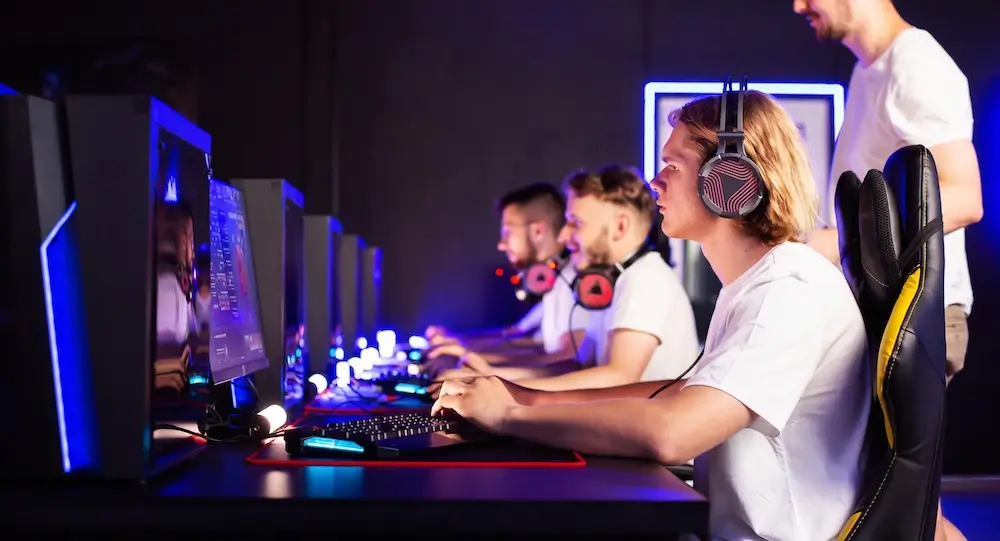
For more than a decade, esports was described as “the future of entertainment.” In 2026, that future hasn’t just arrived — it has been rebuilt.
Competitive gaming has survived hype cycles, financial corrections, and cultural skepticism. What exists today is no longer a speculative industry chasing legitimacy, but a stabilized, global entertainment ecosystem that comfortably sits alongside movies, music festivals, and traditional sports.
This moment didn’t happen because esports suddenly became bigger. It happened because esports became smarter.
After the industry-wide reset of the mid-2020s, esports stopped trying to copy old media models and finally leaned into what made it different: digital-first distribution, creator-led communities, global accessibility, and deeply human storytelling.
2026 is not the year esports “blew up.”
It’s the year esports became normal.
Table of Contents
The Great Reset: From Hype to Reality
To understand why esports feels mainstream in 2026, you have to understand what nearly broke it.
Between 2023 and 2025, the industry went through what many insiders openly called the “Esports Winter.” Team valuations collapsed, venture capital slowed, and unsustainable business models were exposed. Organizations that relied on endless funding rounds without real fan monetization struggled to survive.
At the time, it felt like a crisis.
In hindsight, it was a correction.
The reset forced a pivot away from pure competition toward a ‘Media House’ model; successful 2026 organizations now operate like lifestyle brands, prioritizing direct-to-consumer digital products and creator-led IP over volatile tournament prize pools.
By 2026, esports emerged leaner, more disciplined, and more aligned with how people actually consume entertainment.
The Olympic Effect: Global Legitimacy at Scale
One of the biggest turning points for mainstream perception came from outside the industry itself.
The 2025 Olympic Esports Games in Saudi Arabia, backed by the IOC, served as the industry’s ‘formal debutante ball,’ providing a standardized global framework that finally silenced the debate over whether digital mastery counts as world-class athleticism. For decades, esports fought the perception that it was “just kids playing games.” The Olympic partnership didn’t magically solve every criticism, but it reframed the conversation.
Suddenly, esports wasn’t only about brands versus brands or teams versus teams. It became countries versus countries.
National Pride Changed the Audience
In 2026, more viewers tune in to esports competitions not because they play the games, but because they are supporting national teams in Olympic circuits or regional multi-sport events. This shift brought in older audiences and casual viewers who had never previously engaged with competitive gaming.
The rules didn’t need to be fully understood. The motivation was simple: national pride.
Just as the Olympics legitimized skateboarding and breakdancing, esports gained cultural acceptance by standing on the same global stage.
Esports Stopped Chasing Old Media — And Found Its Own Voice
For years, esports tried to imitate traditional sports broadcasting. Glossy desks, rigid commentary, scripted segments — all designed to look “professional.”
In 2026, that approach feels outdated.
Esports didn’t become mainstream by copying television. It did so by abandoning it.
The Creator-Led Broadcast Revolution
The dominant way people watch esports today is through creators, not official broadcasts.
Co-streaming has become the default viewing experience:
- Top streamers host watch parties that feel like digital sports bars
- Commentary blends analysis, humor, and real-time audience interaction
- Viewers can choose voices they trust rather than a single official feed
This de-formalized model works because it mirrors how younger audiences consume everything else — through personalities, not institutions.
For casual viewers, creators act as translators. They explain complex plays, tell player stories, and make elite competition feel approachable rather than intimidating.
Esports Is Watched Like Entertainment, Not Sport
One of the clearest signs esports has gone mainstream is how people talk about it.
Fans no longer frame esports purely around competition. They discuss:
- Player arcs
- Team chemistry
- Mental health struggles
- Rivalries and redemption stories
This mirrors how audiences engage with scripted entertainment.
People don’t need to understand every mechanic of a game to feel invested. They follow esports for the same reason they follow TV series or sports leagues — because they care about the people involved.
See also: The 8 Best Gaming PCs to Dominate 2026: Your Complete Buying Guide
Players Became the Product — And That Changed Everything
In earlier eras, esports players were often faceless avatars behind team logos. In 2026, that anonymity is gone.
Modern esports players are public figures.
They stream, vlog, post on social media, and openly discuss pressure, burnout, and identity. This transparency has transformed how fans connect with competition.
From Skill Metrics to Human Stories
Raw mechanical skill still matters, but it’s no longer the primary driver of fan attachment.
Audiences care about:
- Comebacks after burnout
- Rookies breaking through established hierarchies
- Veterans adapting to new metas and roles
Some broadcasts now integrate real-time biometric data — such as heart rate or stress indicators — during high-pressure moments. This doesn’t gamify the players; it humanizes them.
With real-time AI ‘Intent Overlays’ now explaining the why behind a professional’s split-second decision, viewers don’t just see the play—they see the mental chess and the physical cost.
Mobile Esports: The True Engine of Global Growth
While PC esports dominated early Western narratives, mobile esports is the real mainstream driver in 2026.
In large parts of Asia, Latin America, and emerging markets, smartphones are the primary gaming platform. Competitive mobile titles now deliver massive viewership numbers and packed live events.
This isn’t a side trend — it’s foundational.
Why Mobile Changed the Equation
Mobile esports succeeded because it democratized the ‘pro’ experience; by 2026, cloud-integrated streaming has allowed even entry-level smartphones to run high-fidelity competitive titles, effectively turning 4 billion devices into potential tournament-ready consoles.
As a result, esports audiences became younger, more diverse, and more global. Entire regions entered the ecosystem not as spectators, but as active participants.
This global democratization is one of the strongest reasons esports feels culturally embedded rather than niche.
Esports Events Became Experiences, Not Just Matches
By 2026, esports events are designed as entertainment experiences first and competitions second.
Production quality rivals major sports broadcasts, but the presentation is more flexible and digital-native. Live arenas integrate lighting effects, music, and interactive audience participation. Online viewers can influence elements of the broadcast in real time.
Watching an esports final today feels closer to attending a live show than watching a traditional sporting event on TV.
Lean-Forward Entertainment: Why Esports Feels Different
Most traditional entertainment is passive. You sit back and watch.
Esports in 2026 is interactive by design.
Viewers:
- Vote in live polls
- Participate in predictive mini-games
- Trigger visual or audio effects through digital cheering
- Engage directly with creators and communities
This “lean-forward” experience keeps audiences engaged in ways passive entertainment struggles to match.
It’s not just something you watch — it’s something you participate in.
Digital Ownership and Community Identity
Another quiet but important shift is how fans relate to teams and leagues.
Instead of traditional merchandise alone, esports organizations now offer digital access, community memberships, and fan-driven initiatives. These don’t replace physical fandom — they deepen it.
Fans feel closer to teams because interaction is constant, not seasonal.
This sense of belonging is critical to mainstream longevity.
Brands Followed the Audience — Not the Other Way Around
As esports matured, brand involvement changed.
Early sponsorships were often experimental and short-term. In 2026, partnerships are more deliberate and long-term, focusing on shared values and storytelling rather than logo placement.
Non-endemic brands — from fashion to automotive — now treat esports as a cultural platform, not a risky bet.
That shift signals confidence, not hype.
Esports and Traditional Sports Are No Longer Rivals
The old narrative of esports versus traditional sports no longer applies.
Many fans follow both. Athletes collaborate with gamers. Sports organizations invest in esports divisions. The lines are increasingly blurred.
Rather than replacing traditional sports, esports fills gaps:
- Faster content cycles
- Global digital reach
- Deeper audience interaction
They coexist because they serve different moods and habits.
Why 2026 Is the Tipping Point
Esports didn’t suddenly become mainstream in 2026.
It crossed a threshold.
This is the year when:
- Esports stopped explaining itself
- Casual viewers felt comfortable tuning in
- Sustainability replaced speculation
The industry no longer needs to prove it belongs. It already does.
Final Thoughts: The New Normal
Esports didn’t become mainstream because games improved or prize pools grew. It became mainstream because the experience matured.
After surviving its own correction and gaining global legitimacy, esports transitioned from a trend into a permanent pillar of modern entertainment.
In 2026, we no longer ask when esports will arrive.
For an entire generation, it already has.
